
An article in Dezeen Magazine features the work of French photographer Laurent Chéhère who creates imaginative images of Paris buildings unhinged from their surroundings.
An article in Dezeen Magazine features the work of French photographer Laurent Chéhère who creates imaginative images of Paris buildings unhinged from their surroundings.
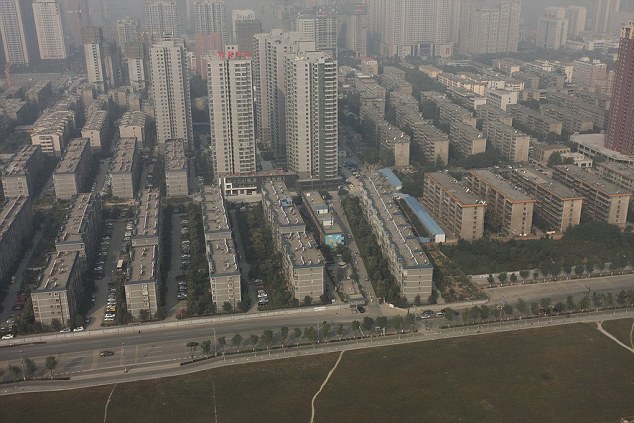
An interesting conflict between a new building and an eight-lane highway in Xi’an, Shaanxi province in Western China. More info and photos here.
I am pleased to announce a new book chapter, ‘Expertise: Specialised Knowledge in Environmental Politics and Sustainability’, co-authored with my colleague Ralf Brand. The chapter appears in the Routledge Handbook of Global Environmental Politics, edited by Paul G. Harris. More info here.
 I recently contributed to a special issue of Building Research & Information edited by Tim Dixon and Malcolm Eames on ‘Urban retrofitting for the transition to sustainability’. The special issue includes the following articles:
Scaling up: the challenges of urban retrofit
Tim Dixon & Malcolm Eames
City futures: exploring urban retrofit and sustainable transitions
Malcolm Eames, Tim Dixon, Tim May & Miriam Hunt
Retrofitting England’s suburbs to adapt to climate change
Katie Williams, Rajat Gupta, Diane Hopkins, Matthew Gregg, Catherine Payne, Jennifer L. R. Joynt, Ian Smith & Nada Bates-Brkljac
Retrofitting existing housing: how far, how much?
Phil Jones, Simon Lannon & Jo Patterson
Socio-technical issues in dwelling retrofit
Chris Tweed
Towards systemic domestic retrofit: a social practices approach
Andrew Karvonen
Regenerating cities: technological and design innovation for Australian suburbs
Peter W. Newton
Water–energy nexus: retrofitting urban areas to achieve zero pollution
Vladimir Novotny
Reducing energy demand through retrofitting buildings
Fionn Stevenson


I accompanied Graham Haughton and his ‘Sustainable Communities’ class on a fieldtrip to see Saltaire, a old industrial town that has been regenerated as a sustainable urban development. There are some interesting tensions here between historic preservation and aims to improve the energy performance of buildings. We also visited the Greenhouse in Leeds, a refurbished building with impressive sustainability credentials.
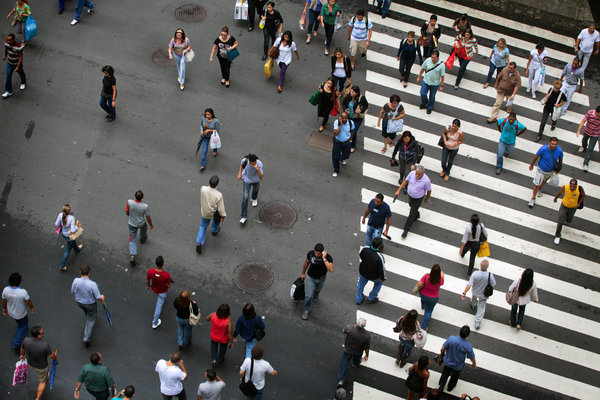
A fascinating article in the New York Times about exploding manholes in Rio de Janeiro. The explosions occur when gases condense underground and interact with frayed and sparking electric lines. This results in dangerous conditions where urban infrastructure ‘bites back’.

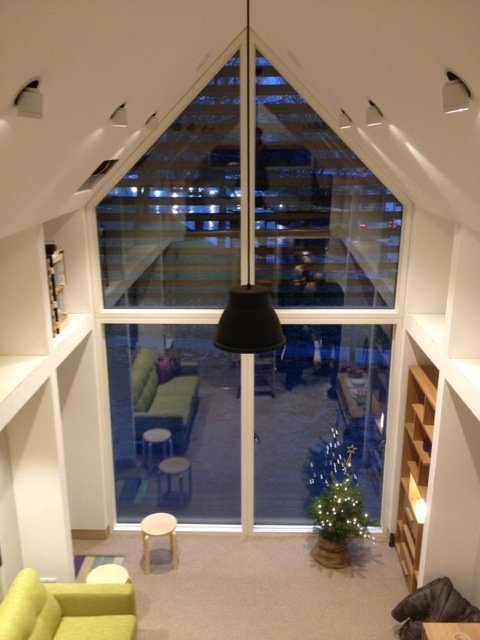
My friend, Ric Frankland, has designed and built an inspiring housing prototype, Dwelle House, that has optimised performance in a small package. I visited during an open house and was impressed by the build quality and attention to detail.
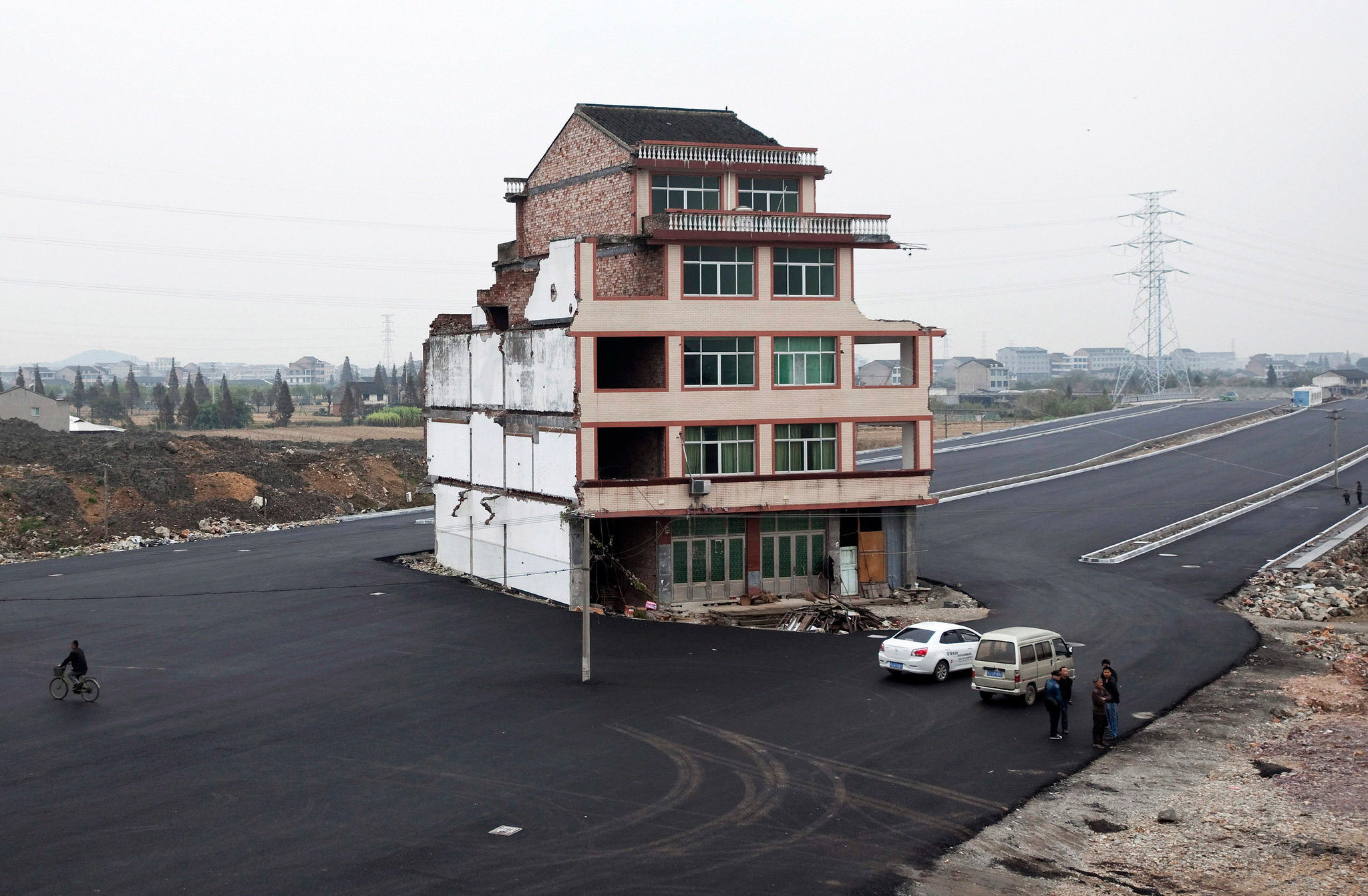
A photo in the International Herald Tribune on 23 November 2012 showing a house in Wenling, an eastern Chinese city, in the middle of a new road (the homeowner refused to sell).

I recently visited Milan where I was invited to give a talk at Milan Polytechnic on ‘The University as Urban Catalyst: Facilitating Sustainable Development’. Thanks to Ciu Lui for the invitation. I also had the opportunity to check out some of the city and ran across the ancient canal network (currently drained for maintenance).

I recently visited Helsinki where I attended a conference at the Aalto Business School on ‘Energy and Society’. Fortuitously, my hotel was located directed in front of the Baana, an old subterranean rail line that has been converted into a hike and bike trail. It’s a Finnish interpretation on New York City’s High Line!
 Andrew Karvonen