Saltaire

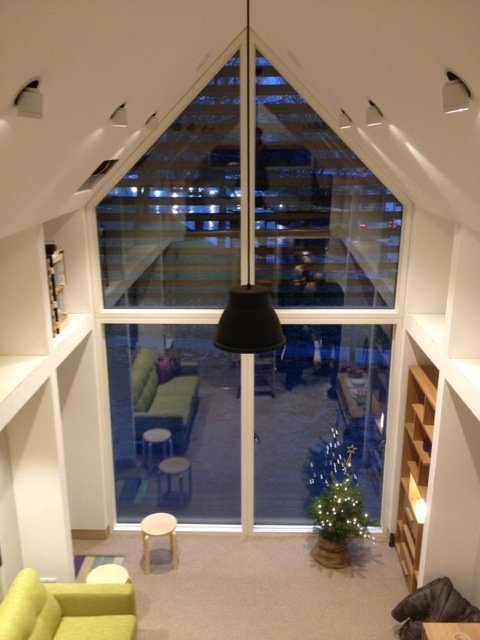
SaltaireGreenhouse

I accompanied Graham Haughton and his ‘Sustainable Communities’ class on a fieldtrip to see Saltaire, a old industrial town that has been regenerated as a sustainable urban development. There are some interesting tensions here between historic preservation and aims to improve the energy performance of buildings. We also visited the Greenhouse in Leeds, a refurbished building with impressive sustainability credentials.

Eco toilets = flush twice

I attended the Royal Geographical Society annual meeting in Edinburgh where I presented a paper on ‘Zero Carbon Housing in England and the Emergence of Meso-Scale Energy Provision’. I stayed in one of the dormitories at the University of Edinburgh and the toilet in my room included the following sticker: ‘This is an eco fill toilet, please flush a second time if required.’

The Reemergence of Microhydro in the UK

The 3 June 2012 issue of the Observer Magazine includes a new article by Catherine Deveney on the reemergence of microhydro in the UK. The article profiles landowners who have restarted ageing mill infrastructure or who have created new hydroelectric systems to harness water energy on their properties. The author also speculates on larger systems that could be run by communities. There are some interesting tensions on reaping the benefits of this renewable energy source versus the potential impacts on wildlife who use the waterways.

Monkeys in New Delhi

Gardiner Harris of The New York Times recently published a fascinating article about the increasing problem of monkeys in New Delhi. Packs of aggressive primates are harassing human residents while efforts to control the expanding populations are confounded by Hindi religious customs, individual behaviour (feeding the monkeys), lack of financing, and arguments over governmental responsibility.

Ernest Callenbach Dies at 83

The author Ernest Callenbach has passed away at the age of 83. He was well-known in environmental circles for his 1975 novel Ecotopia in which the Northwest US seceded from the rest of the country to form its own ecologically conscious nation. While some elements of the novel are a bit dated today, he contemplated many ideas about bioregional habitation that inspired thousands of writers, activists, and residents to reconsider and reconfigure their lives to create more improved futures.